

How to Troubleshoot & Repair Common Furnace Problems
A working furnace keeps your home safe and comfortable. When it stops performing, deciding whether a quick DIY fix will do or if you need professional repair can be stressful. This guide — written from a technician’s point of view — walks you through practical troubleshooting for the most common furnace problems. You’ll learn why a furnace might not heat, how to interpret odd noises, what causes frequent on/off cycling, and when to call in an expert. Follow step-by-step checks for thermostats, filters, ignition systems, and airflow, and use the quick diagnostic tables to match symptoms to likely causes and immediate actions. The goal is to give homeowners clear, safe steps to try first and a simple way to know when it’s time to call a local HVAC pro.
Why Is My Furnace Not Heating? Diagnosing Common Heating Failures
If your furnace runs but you still feel cold air, the problem usually falls into three areas: controls, combustion, or airflow. In plain terms, the thermostat must ask for heat, the furnace must have power, the ignition must light, and warm air must get into your home. Pinpointing which link is broken saves time and money. Start with a few safe, prioritized checks below — they’ll show whether the issue is electrical, fuel-related, or an airflow restriction — then use the quick-reference table to decide the next step.
A methodical approach that uses all available system data is key to accurate furnace diagnostics. Before opening panels or touching gas components, run these basic checks to confirm the unit’s outside-the-box operation.
- Check the thermostat: make sure it’s set to “Heat” and the setpoint is higher than room temperature; replace batteries if needed.
- Verify power: inspect the home’s breaker panel and the furnace service switch to ensure the unit has power and no tripped breakers.
- Inspect airflow: swap or examine the air filter for heavy buildup and confirm supply registers are open so air can move freely.
These quick steps remove common misconfigurations and prepare you for more detailed troubleshooting if you still have no heat.
Use the table below to match what you see with the next safest action.
| Symptom | Likely Cause | Immediate Action |
|---|---|---|
| Furnace blower runs but air feels cold | Thermostat setting, control signal, or ignition failure | Check thermostat mode and batteries; listen for the ignition sequence |
| Furnace completely dead | Tripped breaker or service switch turned off | Check circuit breaker and the furnace on/off switch |
| Furnace cycles but no heat is produced | Pilot/ignitor problem or gas supply issue | Inspect pilot/ignitor status; do not attempt gas-line work — call a pro if unsure |
This reference helps you prioritize safe DIY checks and know when to stop and get professional help.
How Do Thermostat Issues Affect Furnace Heating?
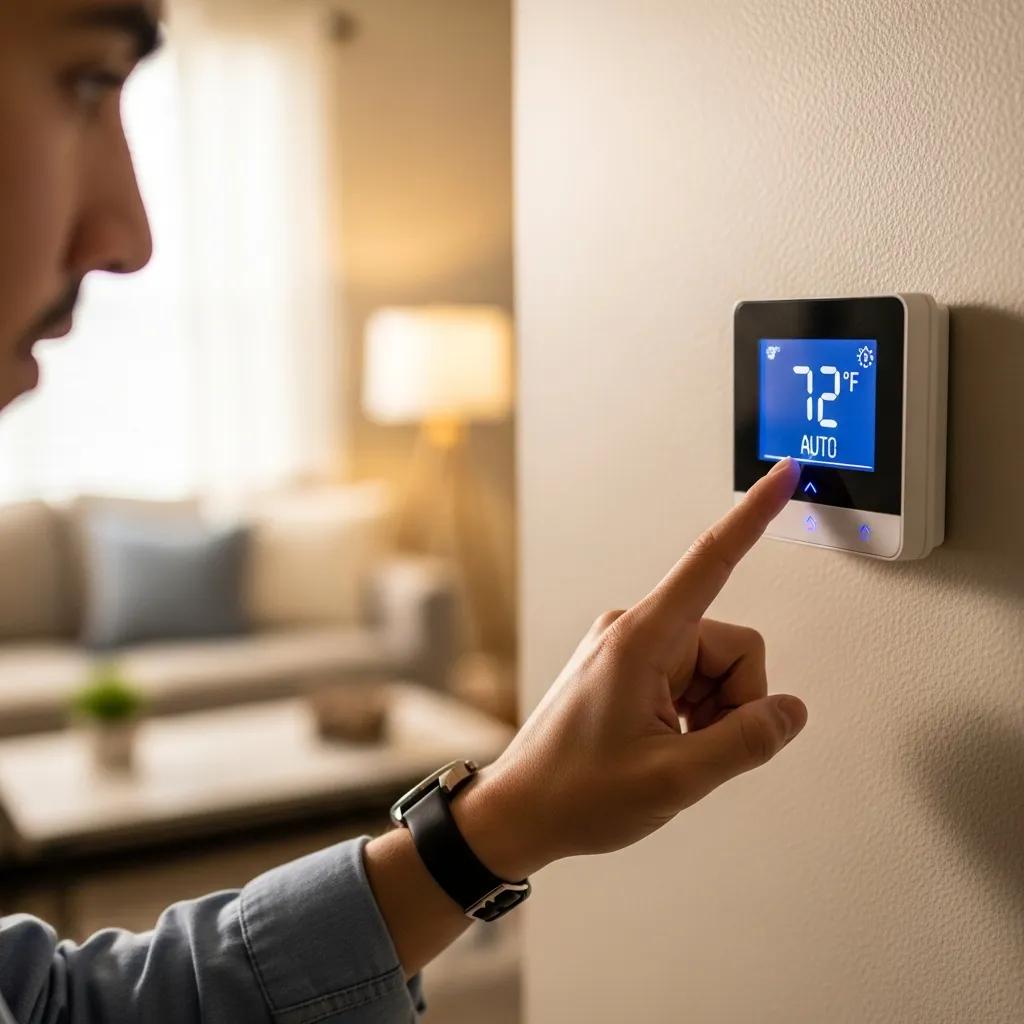
Your thermostat is the system’s command center. If it’s set wrong, has dead batteries, bad wiring, or a misconfigured schedule, the furnace may never get the signal to fire. Smart thermostats add conveniences — and complexity — so check schedules, remote hold settings, and Wi‑Fi connections if you have one. Start by confirming mode and setpoint, swap batteries if needed, then raise the temperature to see if the furnace begins its ignition sequence. If the thermostat seems to be calling for heat and the furnace still does nothing, the thermostat or its wiring likely needs further testing by a technician.
If thermostat checks show the unit is receiving a call for heat but still won’t warm the home, move next to electrical and ignition inspections.
What Causes Pilot Light and Ignition Failures?
When a pilot light or electronic ignitor fails, the furnace may have power and run fans but won’t produce heat. Older furnaces have a standing pilot and a thermocouple; a weak flame or a dirty thermocouple can stop the gas valve from staying open. Newer furnaces use hot-surface or spark ignitors that can crack or wear out, often seen as repeated failed attempts to light and eventual lockout. Follow the manufacturer’s instructions for safely relighting pilots if applicable; avoid poking at electrical ignitors. If relighting doesn’t help or lockouts continue, call a trained technician for a safe inspection.
Once ignition issues are ruled out, diagnostics typically shift to fuel supply and safety controls.
What Are the Main Causes of Furnace Noise and How Can I Fix Them?
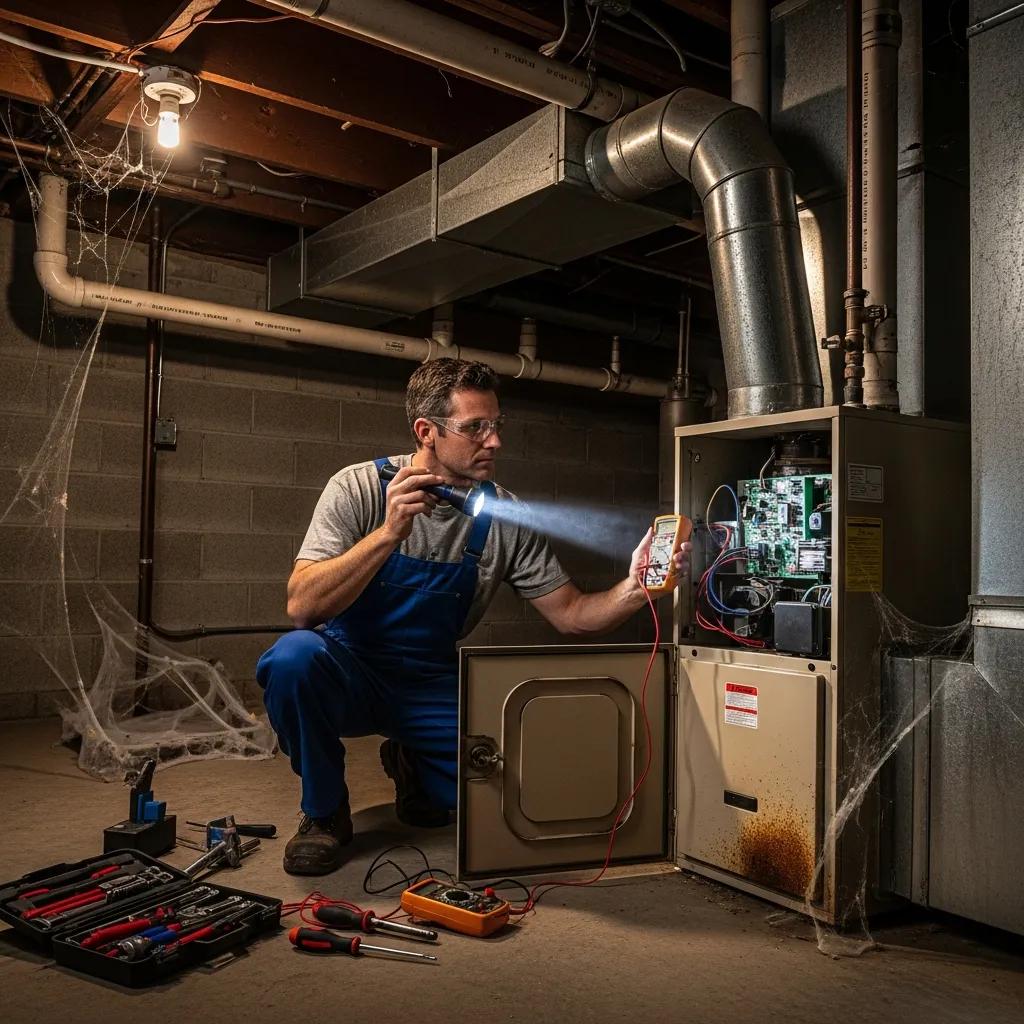
Unusual sounds are often the first sign of mechanical wear, airflow problems, or combustion issues. Identifying the sound helps you decide whether it’s safe to keep the system running or time to shut it down and call a pro. Squeals, grinding, banging, and burning smells point to different problems: a squeal typically means a slipping belt or blower bearing, grinding suggests bearing failure, bangs can be delayed ignition or duct movement, and burning odors may indicate electrical overheating or dust burning off. If you smell burning or hear metal-on-metal contact, turn the system off and schedule service. Note when the noise occurs — startup, shutdown, or continuously — to give technicians useful clues.
Use the short checklist below to link sounds with likely causes and decide whether a DIY check is safe or if professional help is needed.
- A high-pitched squeal at startup or while running usually signals a slipping belt or worn blower bearings.
- Rattling or clanking often comes from loose panels, sheet‑metal ducts, or debris in the cabinet.
- Loud banging at startup can be delayed ignition; repeated bangs increase wear and should be inspected.
If the sound seems internal to the motor or combustion area, stop the unit and call a technician rather than attempting complex repairs yourself.
Below are common noises, the likely components involved, and the safest immediate step.
| Sound | Probable Component | Immediate Safety Step |
|---|---|---|
| Squealing | Blower belt or motor bearings | Turn off power and inspect belt; do not run if grinding is present |
| Grinding | Motor bearings | Power down and schedule motor service — continued use risks failure |
| Banging/popping | Delayed ignition or duct expansion | Note when it happens; if flame looks unstable, shut down and call for inspection |
This table helps separate fixes you can safely attempt from problems that need a technician’s tools and training.
Which Noises Indicate Blower Motor or Mechanical Problems?
Noises from the blower area — squeals, grinding, or steady rattles — usually point to motor bearings, belts, or loose mounting hardware. A squeal early in startup commonly means a worn belt or a motor needing lubrication; grinding typically indicates bearing failure that can lead to motor seizure. A rattle might be a loose panel, but if it comes with reduced airflow or uneven heating, the blower assembly or ductwork likely needs professional attention. If you hear mechanical sounds coming from the blower compartment, shut off power, look for loose panels or debris, and set up a service visit if the noise continues or you smell burning.
Taking action quickly helps prevent motor burnout and keeps heat delivery steady.
How to Recognize and Address Banging, Popping, or Burning Odors?
Some popping or ticking is normal as ducts expand and contract, but loud bangs at startup can signal delayed ignition, and any burning smell is a warning you shouldn’t ignore. Delayed ignition happens when gas builds up before the burner lights, producing a small but forceful bang; repeated events stress the heat exchanger and are a safety concern. A persistent burning smell may be dust burning off, but it can also be an overloaded motor or an electrical fault — if the odor is strong or gets worse, shut the system down. If you detect gas, evacuate the home immediately and call emergency services. For electrical burning or strong mechanical burning smells, power off the furnace and contact a qualified technician right away.
These signs call for immediate safety steps and expedited professional diagnostics.
How Can I Troubleshoot Furnace Cycling On and Off Frequently?
Frequent on/off cycling, or short cycling, puts extra wear on components and raises energy costs. Short cycling happens when the furnace reaches a safety limit too quickly or when control signals rapidly stop and start the burner. Causes range from dirty filters and blocked vents to an oversized unit or failing sensors. If left unchecked, short cycling can shorten system life and hide deeper problems like a stressed heat exchanger or failing control board. Start troubleshooting with airflow and thermostat checks, then move to sensor and combustion inspections. If the issue persists after basic fixes, schedule a professional evaluation to check sizing, sensors, and controls.
Follow this quick checklist to reduce cycling before calling for advanced diagnostics.
- Replace or clean the air filter and confirm supply and return vents are clear to restore proper airflow.
- Check thermostat location and calibration — avoid areas near drafts or heat sources that give false readings.
- Watch run cycles: if the unit only runs briefly before shutting off, that suggests overheating, airflow restriction, or an electrical control problem.
These steps often fix common causes. If short cycling continues, a technician can test sensors and controls and evaluate whether the system is correctly sized for your home.
| Symptom | Common Causes | Professional Fix |
|---|---|---|
| Furnace runs 2–5 minutes then shuts off | Dirty filter, blocked vents, or airflow restriction | Replace filters, clean ducts, inspect blower assembly |
| Furnace cycles frequently regardless of thermostat | Faulty thermostat or flame sensor, oversized unit | Calibrate or replace thermostat, test flame sensor, evaluate system sizing |
| Furnace short cycles with error codes or lockouts | Control board or pressure switch faults | Advanced diagnostic and component replacement by technician |
This comparison shows which problems you can handle and which need professional testing and repair.
What Is Short Cycling and Why Does It Happen?
Short cycling is when a furnace repeatedly turns on and off in short bursts because it can’t complete a full heating cycle. It can be caused by restricted airflow that overheats the unit, sensors that misread temperatures, control board errors, or an oversized system that heats the space too quickly. Short cycling stresses the heat exchanger and starter components, so it’s important to find whether airflow restrictions, sensor faults, or incorrect sizing are to blame before deciding on repairs.
Research also points to oversizing and improper installation as common contributors to short cycling in residential systems.
How Do Dirty Air Filters and Blocked Vents Impact Furnace Efficiency?
Clogged filters and blocked vents limit airflow, forcing the furnace to work harder and often causing overheating, reduced heat transfer, and short cycling. Restricted airflow raises temperatures across the heat exchanger, can trip safety limits, and shortens blower motor life from extra strain. Closed or blocked supply and return vents create uneven heating and pressure imbalances that lower comfort and efficiency. A simple monthly filter check and periodic vent inspections go a long way toward preventing these issues and improving system performance.
Remember: the blower is what moves heated air through the home, so any restriction has a big impact on system performance.
When Should I Call for Professional Furnace Repair in Tampa?
Some signs require prompt professional attention because they involve safety, combustion integrity, or major component failure. Call an expert right away for persistent burning or gas odors, visible damage to the furnace or heat exchanger, ongoing short cycling after basic troubleshooting, or electrical burning smells or smoke. You should also call a technician if you have no heat after initial checks, large temperature differences between rooms, unusually high energy bills, or noises that suggest motor or combustion trouble. Local, experienced technicians bring diagnostic tools and safety procedures needed to inspect heat exchangers, gas valves, and control systems and give you clear, prioritized repair options.
Below is a short checklist of warning signs that usually mean it’s time for professional service rather than more DIY attempts.
- Strong or persistent burning odor or visible smoke while the system runs.
- Noticeable gas smell or suspected leak in the furnace area.
- Repeated lockouts, error codes, or short cycling after filters and thermostat checks.
- Loud metal-on-metal noises or grinding coming from the blower compartment.
What Are Signs That Require Expert Furnace Maintenance or Replacement?
Major failures or steady performance decline point to the need for professional maintenance or replacement. Key indicators include frequent breakdowns, unsafe combustion signs, and sharply rising operating costs. A cracked or compromised heat exchanger is a serious safety risk because it can let combustion gases into the home and requires immediate professional attention. If your furnace needs constant major repairs or its seasonal efficiency drops quickly, replacement may be more cost-effective — a technician can walk you through a repair-versus-replace analysis based on performance and service history. In short, persistent safety warnings, structural damage, or recurring failures despite regular maintenance are clear reasons to call a qualified pro for assessment and recommendation.
How Does Northside Services Provide Reliable Furnace Repair Solutions?
Northside Services delivers local furnace repair and maintenance with an emphasis on fast, accurate diagnostics and honest recommendations tailored to your home. Our process is straightforward: inspect the system, diagnose root causes, present repair or replacement options, and carry out the agreed work — all explained clearly before you approve anything. Serving Tampa and nearby communities, we focus on quick response for breakdowns and practical solutions that restore comfort and reliability. If DIY checks don’t fix the issue, Northside Services makes it easy to schedule an inspection and get professional follow-up.
Get Your Home Comfortable Again — Your Local HVAC Partner
If you notice safety warnings, ongoing failures, or anything beyond safe DIY checks, Northside Services offers professional furnace diagnostics, repairs, and maintenance tailored to your system and home. Booking a diagnostic inspection with a trusted local team gives you a prompt, thorough assessment that finds root causes and restores efficient, reliable heating.
- Diagnostic Inspection: A complete inspection to find control, combustion, or airflow problems.
- Clear Recommendation: Straightforward, safety-first repair, maintenance, or replacement options.
- Follow-up Service: Repairs and maintenance performed with an emphasis on lasting reliability and comfort.
These steps help you get your heating system back to reliable operation with confidence.
Conclusion
Knowing common furnace issues and how to troubleshoot them helps you keep your home safe and comfortable. Follow the steps in this guide to diagnose basic issues and decide when to call a professional. Regular maintenance and timely repairs improve efficiency and extend your system’s life. For expert help tailored to your needs, consider scheduling a diagnostic inspection with Northside Services — we’ll find the problem and get your home warm again.