

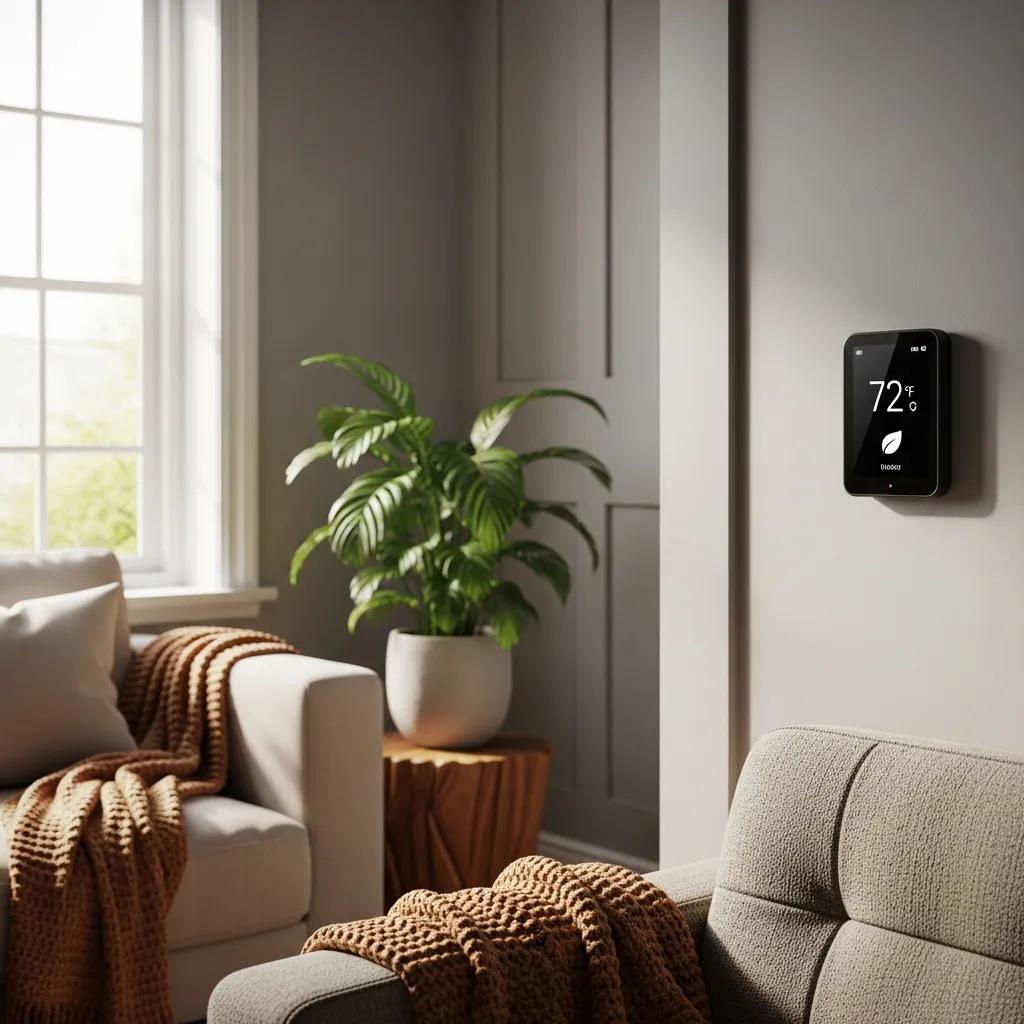
Smart Thermostat Features — Save Energy and Control Comfort from Anywhere
A smart thermostat links to your HVAC system and uses sensors, schedules, and cloud-based controls to keep your home comfortable while cutting energy use. Learning routines, Wi‑Fi access, occupancy detection, and energy reports work together to deliver steadier comfort and measurable savings. This guide walks through the core features — how smart thermostats lower utility bills, what remote access and learning models do, and how geofencing and energy monitoring turn data into real savings. If you’re dealing with high cooling loads, uneven temperatures, or surprise service issues, you’ll find practical tips and setup guidance here. Northside Services can also handle installation and integrate your thermostat with existing HVAC or home-automation systems so the tech performs reliably year‑round. Read on for a feature-by-feature breakdown, short comparison tables, and clear next steps to optimize your home climate control.
What Are the Key Benefits of Smart Thermostats for Your Home?
Smart thermostats put control and smarts into one place so your HVAC runs smarter, not harder. They cut wasted runtime with adaptive schedules, improve comfort by anticipating occupancy and weather, and surface maintenance alerts before small issues become big repairs. Those capabilities directly address common homeowner problems: high energy bills, inconsistent temperatures, and missed filter or system warnings. Below is a concise summary of the primary benefits and a supporting industry range to show impact.
Smart thermostats offer several immediate homeowner benefits:
- Energy Savings: Less HVAC runtime thanks to adaptive setbacks and automated schedules.
- Remote Comfort: Use your phone or voice to adjust temperatures from anywhere.
- Preventive Maintenance: Alerts and runtime reports flag unusual behavior early.
Together, these features typically reduce seasonal heating and cooling costs; industry summaries report average savings around 10% to 15% for many homes. If you want hands-on help, Northside Services includes thermostat setup and compatibility checks with our HVAC and home-automation work, ensuring your device talks correctly to your system and delivers the expected savings.
How Do Smart Thermostats Reduce Energy Bills and Increase Efficiency?
Smart thermostats lower energy use by learning your routines, applying temperature setbacks, and optimizing equipment runtime to avoid short cycling. They use weather data and real‑time sensors to precondition rooms efficiently, which trims peak load and overall runtime. Adaptive scheduling means fewer manual changes and steadier comfort with less wasted operation — that algorithmic optimization is the main driver of typical savings. In warm climates like Florida, reducing unnecessary compressor runtime during hot afternoons and using nighttime setbacks can produce especially noticeable savings.
- Adaptive Schedules: The thermostat builds setpoints from actual use patterns rather than fixed timers.
- Setback Strategies: Controlled temperature drift when the home is empty lowers runtime.
- Weather Integration: Anticipatory adjustments prevent running the system harder than needed.
This shifts control from manual, static setpoints to dynamic, context-aware management that trims runtime while preserving comfort, helping your HVAC operate nearer its peak efficiency.
What Comfort and Convenience Features Enhance Your Daily Living?
Smart thermostats simplify daily life with instant remote changes, multiple preset schedules, and integrations with voice assistants and smart-home scenes. You can create distinct modes for sleep, away, and home, temporarily override a schedule without losing learned patterns, and use humidity reminders, vacation modes, or multi‑zone scheduling where supported. These features reduce friction and keep conditions consistent across changing routines.
- Remote Overrides: Adjust temperature from your phone for instant comfort.
- Voice Integration: Hands-free climate control through common voice platforms.
- Mode Presets: One-tap switches between energy, comfort, and away profiles.
Taken together, these conveniences cut down on manual thermostat fiddling while keeping the system in energy‑efficient states whenever possible.
How Does Remote Control and Wi-Fi Connectivity Improve Thermostat Use?

Wi‑Fi extends thermostat control beyond the wall, enabling app access, remote diagnostics, and integration with other smart devices. Remote access gives homeowners instant control and lets technicians view error codes or runtime data remotely to diagnose problems faster. Interoperability with home-automation platforms also enables scene-based comfort actions — for example, combining lighting and temperature changes when you arrive. Reliable connectivity and secure network practices are essential to enjoy these benefits without risking privacy.
Remote control delivers clear advantages:
- Immediate Adjustments: Change settings from anywhere for quick comfort fixes.
- Push Notifications: Get alerts for system issues and filter reminders proactively.
- Centralized Management: Manage multiple thermostats or zones from a single app.
Below is a short comparison of common remote-control methods and what they offer.
| Control Method | Key Trait | Why it Matters |
|---|---|---|
| Smartphone app | Always‑accessible, low latency | Instant remote changes and real‑time alerts |
| Voice assistant | Hands‑free commands, simplified UI | Quick setpoint adjustments and scene control |
| Web portal | Detailed history and admin tools | In‑depth reports and multi‑site oversight |
This shows how each method fits different homeowner priorities: apps for immediacy, voice for convenience, and web portals for deeper analysis. If you’re unsure about compatibility or network setup, Northside Services documents Wi‑Fi thermostat options under our home‑automation offerings and can advise on installation best practices and secure configuration.
What Are the Advantages of Managing Your Thermostat via Smartphone Apps?
Smartphone apps give secure, direct access to thermostat settings, schedules, and alerts from anywhere. They consolidate control for homes with multiple thermostats and surface energy reports that help you make smarter choices. Apps also enable geofencing, trigger-based automations, and temporary holds that preserve your intent while devices continue learning. When configured correctly, apps reduce friction and keep your system focused on efficiency.
- Central Control: Manage devices and schedules in one interface.
- Actionable Alerts: Receive notifications for temperature extremes or maintenance needs.
- Geo-aware Actions: Use location to switch between away and home modes automatically.
Use the app responsibly — update credentials, enable two‑factor authentication, and keep firmware current — to protect performance and privacy while enjoying remote control benefits.
How Does Wi-Fi Connectivity Enable Seamless HVAC System Control?
Wi‑Fi allows over‑the‑air firmware updates, streamlined diagnostics, and faster service visits by letting technicians review system status before they arrive. Connected thermostats can report runtime anomalies and fault codes that point to refrigerant, airflow, or wiring issues, cutting time spent troubleshooting on site. Cloud updates can deliver efficiency tweaks and bug fixes without replacing hardware. Together, these capabilities reduce downtime and improve long‑term reliability.
Research supports the value of cloud‑based monitoring for advanced HVAC diagnostics and proactive maintenance.
- Remote Diagnostics: Technicians can pre-assess problems and bring the right parts.
- Firmware Updates: New features and optimizations arrive over the air.
- System Interoperability: Wi‑Fi connects thermostats with sensors and controllers for coordinated operation.
This transparency shortens repair cycles and helps ensure your HVAC continues to run efficiently over time.
What Are Learning Thermostats and How Do They Adapt to Your Lifestyle?
Learning thermostats observe patterns and sensor inputs to build personalized temperature schedules that match how you actually live. They watch manual adjustments, detect presence changes, and correlate those actions with time and environmental data to predict comfortable setpoints. Over days to weeks the device refines its model, reducing the need for manual changes while keeping comfort steady and runtime low. The result is a tailored schedule that adapts to routine shifts and seasonal changes.
Learning thermostats rely on a few core inputs and produce clear outcomes for homeowners:
| Thermostat Capability | Input Data Used | Outcome for Homeowner |
|---|---|---|
| Schedule learning | Manual setpoints, time patterns | Personalized daily routines |
| Occupancy adaptation | Motion sensors, phone presence | Less conditioning of empty rooms |
| Weather adjustment | Local forecasts, temperature sensors | Anticipatory heating/cooling, reduced peak runtime |
These features mean fewer daily interactions and a system that balances comfort and efficiency as your routine changes.
How Do Learning Algorithms Create Personalized Temperature Schedules?
Learning algorithms track repeated behaviors, occupancy signals, and external weather data to build a probabilistic schedule that anticipates needs. They begin by logging manual overrides, then test small automated adjustments to verify comfort thresholds. Over time the algorithm settles into reliable routines for wake, away, and sleep periods with minimal input from you. That reduces manual management and energy wasted by static, poorly timed setpoints.
- Data Collection: The thermostat records setpoints and occupancy events.
- Pattern Detection: Algorithms identify routines and anomalies.
- Schedule Refinement: The device applies adjustments and evaluates feedback.
This loop — observe, predict, refine — delivers personalized comfort while steadily cutting unnecessary HVAC runtime.
What Role Does Occupancy Sensing Play in Adaptive Climate Control?
Occupancy sensing prevents conditioning empty spaces by using motion detectors and presence indicators to switch systems into eco modes when rooms are unused. Paired with geofencing, the thermostat can detect whole‑home absence and apply wider setbacks to save energy. Sensors also help avoid overcooling or overheating during short departures by distinguishing brief absences from longer ones. Occupancy features should be tuned to user preferences to avoid uncomfortable, overly aggressive setbacks.
- Reduced Wasted Runtime: Systems avoid heating or cooling empty rooms.
- Smart Setbacks: Presence data triggers the appropriate energy state.
- Integration with Geofencing: Phone presence informs whole‑home modes.
Used thoughtfully, occupancy sensing complements learning schedules and energy monitoring to keep comfort high while lowering consumption.
How Can Energy Saving Features Like Geofencing and Energy Monitoring Help You?
Geofencing and energy monitoring turn abstract numbers into actionable changes by linking location and usage data to system control. Geofencing automates away/home transitions using phone presence, while energy reports show runtime, setpoint changes, and trends that reveal inefficiencies. Together they enable targeted tweaks — for example widening setbacks during extended absences or spotting a component that drives excessive runtime. Many homeowners see single‑digit to low‑teens percentage improvements when they apply these features consistently.
The following table explains common energy features and what they typically deliver for homeowners.
| Feature | What it measures/controls | Typical benefit/value |
|---|---|---|
| Geofencing | Occupant phone presence | Automates away modes and cuts idle runtime |
| Energy reports | Runtime and setpoint changes | Reveals inefficiencies and guides schedule tweaks |
| Scheduling optimization | Setpoints over time | Smooths peaks and reduces peak‑hour operation |
These tools convert data into decisions, letting homeowners tune systems for measurable savings and longer equipment life. If you’d like help interpreting reports or setting geofencing and schedules for maximum effect, Northside Services offers consultation and installation support to ensure features are configured correctly and securely.
What Is Geofencing and How Does It Optimize HVAC Energy Use?
Geofencing uses your mobile device’s location to trigger temperature modes when you cross a virtual boundary around the home. It automates away and return transitions so the HVAC spends less time conditioning empty space and reaches comfort close to your arrival. Accuracy depends on device settings and permissions, so initial calibration and your preferences matter. Properly set up, geofencing reduces unnecessary runtime without requiring manual interaction.
- Location-based Triggers: Entering or leaving the zone flips modes automatically.
- Energy Impact: Cuts idle conditioning when people are away.
- Setup Considerations: Requires app permissions and occasional calibration.
For households that travel or keep irregular schedules, combining geofencing with learning schedules is a reliable way to maintain comfort and consistent savings.
How Do Energy Usage Reports Support Smarter Heating and Cooling Decisions?
Energy usage reports summarize runtime, temperature trends, and deviations from programmed schedules to reveal where changes will pay off most. They flag outliers — long runtimes, frequent overrides, or unusual cycling — and translate those signals into recommended actions like tightening schedules or scheduling maintenance. Reviewing reports monthly helps you track progress and confirm that changes produce the expected savings. When reports point to possible faults, targeted service prevents wasteful operation and preserves comfort.
- Key Metrics: Runtime, cycle frequency, setpoint changes, and temperature swings.
- Actionable Insights: Recommendations to tighten schedules or inspect equipment.
- Continuous Improvement: Use reports to measure the impact of changes over time.
Conclusion
Smart thermostats deliver tangible benefits: energy savings, steadier comfort, and proactive maintenance alerts that address common homeowner pain points. By using features like remote access, learning algorithms, and geofencing, these devices help your HVAC run more efficiently and lower utility costs. Ready to take the next step? Explore installation options with Northside Services and let our team integrate smart thermostat technology for reliable, year‑round comfort and savings.